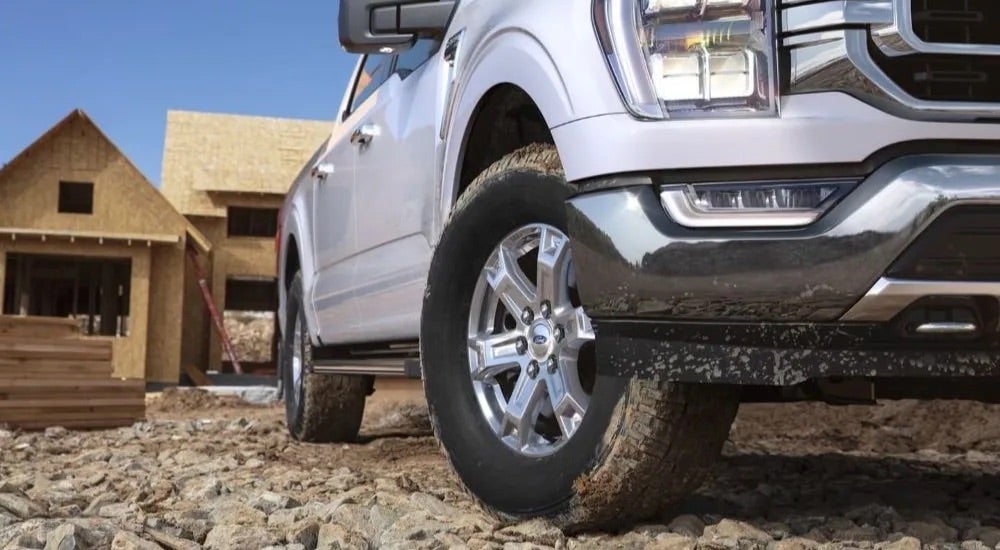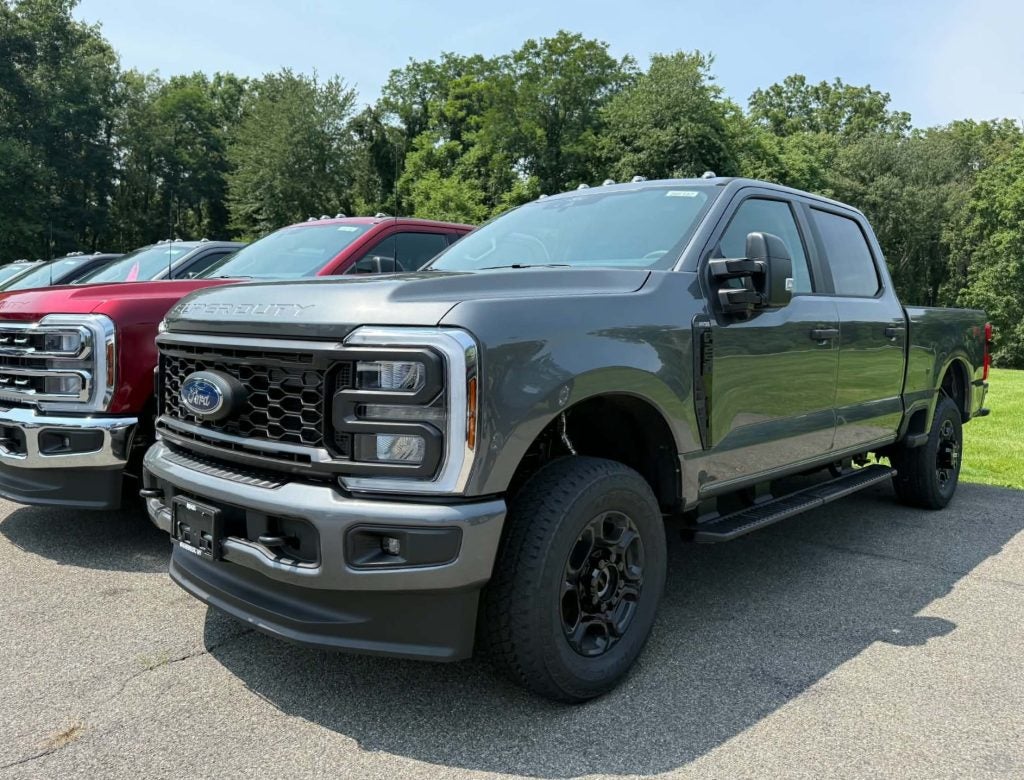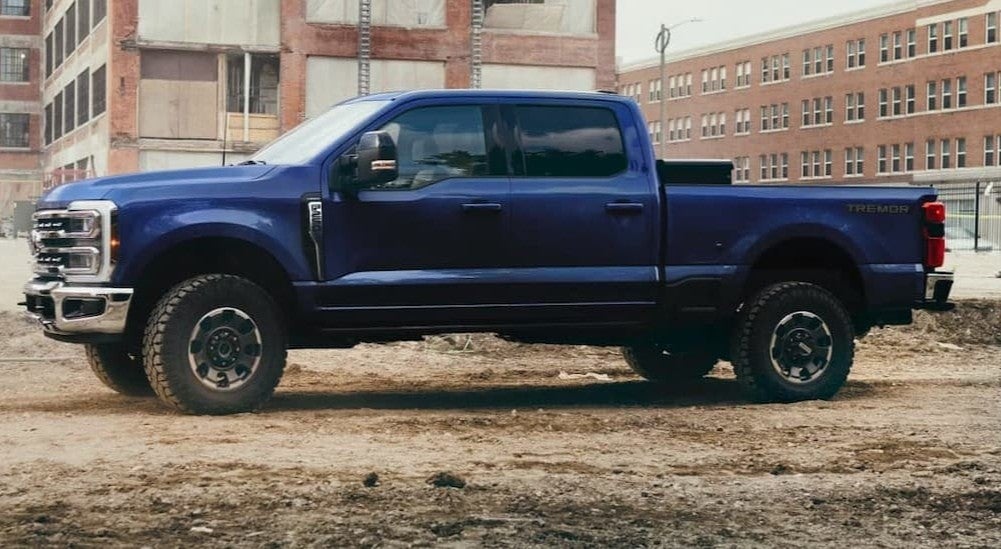

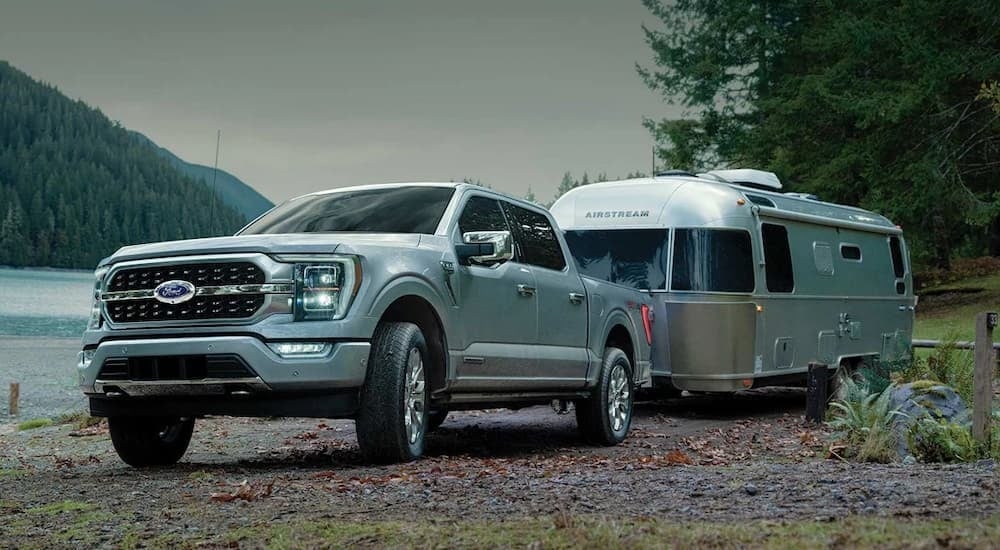
2026 Ford F-150 Towing Guide: Capacity by Trim and Engine Whether you're pulling a boat to the Hudson, a camper up to the Catskills, or a work trailer across the county, the F-150 has a setup for it. The trick is that trim level is only part of the story. Your towing number really comes down to engine, cab, bed length, axle ratio, drivetrain and whether you add the Tow/Haul Package. Here's how it all breaks down, straight from Ford's official specs. Max towing by engine Engine Max Conventional Towing Max Payload 2.7L EcoBoost V6 8,400 lbs 1,775 lbs 3.5L EcoBoost V6 13,500 lbs 2,440 lbs 5.0L Ti-VCT V8 12,800 lbs 2,235 lbs 3.5L PowerBoost Full Hybrid V6 12,400 lbs (4x2) / 11,600 lbs (4x4) 1,740 lbs 3.5L High Output EcoBoost V6 (Raptor) 8,200 lbs 1,405 lbs 5.2L Supercharged V8 (Raptor R) 8,700 lbs 1,410 lbs The top ratings for the 3.5L EcoBoost, 5.0L V8 and PowerBoost all require Tow/Haul Package and Max Tow Axle upgrade. One more thing to keep in mind: horsepower, torque, payload and towing are independent attributes and may not be achieved simultaneously. Engine availability and top tow rating by trim Trim Available Engines Highest Engine Rating Available XL 2.7L EcoBoost, 5.0L V8, 3.5L EcoBoost 13,500 lbs (3.5L EcoBoost) STX 2.7L EcoBoost, 5.0L V8, 3.5L PowerBoost 12,800 lbs (5.0L V8) XLT 2.7L EcoBoost, 5.0L V8, 3.5L EcoBoost, 3.5L PowerBoost 13,500 lbs (Ford's named max tow config) Lariat 5.0L V8, 3.5L EcoBoost, 3.5L PowerBoost 13,500 lbs (3.5L EcoBoost) Tremor 5.0L V8, 3.5L EcoBoost 10,600 lbs (3.5L EcoBoost, Tremor rating) King Ranch 3.5L EcoBoost, 3.5L PowerBoost 13,500 lbs (3.5L EcoBoost) Platinum 3.5L EcoBoost, 3.5L PowerBoost 13,500 lbs (3.5L EcoBoost) Raptor 3.5L High Output EcoBoost 8,200 lbs Raptor R 5.2L Supercharged V8 8,700 lbs A quick heads up: the top ratings above apply to the best-equipped configurations. Ford notes that your specific vehicle's tow capability could be reduced based on weight of selected trim series and option content. So a loaded Platinum won't always match an XLT with the same engine. That's exactly why it's worth sitting down with our team to spec the right truck. Ford What you need to hit max towing For gas trucks, Ford requires the Tow/Haul Package (53T) plus the optional Max Tow Axle for trailers over 11,600 lbs. For the hybrid, the threshold is for trailers over 10,800 lbs. Ford also warns that your New Vehicle Limited Warranty may be voided if you tow without them. 2026 Ford F-150 Towing Information +2 The Tow/Haul Package includes the integrated trailer brake controller and either the 3.55 or 3.73 e-lock rear axle depending on the powertrain. Ford The hitch receiver also changes with the package. A 2" hitch receiver rated at 11,600 lbs. is standard. Max Tow Axle includes 2" reinforced receiver rated at 14,000 lbs. Ford Weight rules worth knowing Use weight distribution over 5,000 lbs. Do not exceed trailer weight of 5,000 lbs. when towing without a weight-distribution system. Ford Tongue weight should be about 10% of the trailer. Trailer tongue load weight should be 10% of total loaded trailer weight. For 5th-wheel and gooseneck trailers, the king pin load should be 15% of total loaded trailer weight. Ford Ford Count people and cargo against payload. Your payload has to cover the tongue weight, your passengers and whatever's in the bed. Watch the trailer's frontal area. Ford's limit is 55 sq. ft. for vehicles with Trailer Tow Rating of 7,700 lbs. or less, 65 sq. ft. for vehicles with Trailer Tow Rating of 7,701 lbs. and greater and 75 sq. ft. for all 5th-Wheel and Gooseneck applications. Ford Heading into the mountains? At elevation, Ford recommends you reduce Gross Vehicle Weight (GVW) and Gross Combination Weight (GCW) by 2% per 1,000 ft. elevation. Ford Bring a matching spare. A conventional, identical full-size spare tire is required for trailer towing. Ford Raptor owners, skip the 5th-wheel. 5th-wheel towing is not recommended for Raptor model. Ford Towing tech that makes life easier Every F-150 comes with trailer sway control, a 7-wire harness, a hitch receiver, a transmission oil cooler and Tow/Haul mode. The Lariat and up add a 360-Degree Camera, Pro Trailer Backup Assist and Pro Trailer Hitch Assist as standard. With Pro Trailer Backup Assist, you simply rotate in the direction you want the trailer to go, and it'll move your truck and trailer into position. Pro Trailer Hitch Assist steers, accelerates and brakes for you, as it guides your truck into place for easy hitching to your conventional trailer. Towing FAQ What's the max towing capacity of the 2026 F-150? 13,500 lbs with the 3.5L EcoBoost V6. Ford's top configuration is the XLT SuperCrew 4x4 with the 6.5' box, the Tow/Haul Package and the Max Tow Axle. How much can the F-150 hybrid tow? Up to 12,400 lbs on a 4x2 SuperCrew and up to 11,600 lbs on a 4x4, when properly equipped. How much can the F-150 Tremor tow? Up to 10,600 lbs with the 3.5L EcoBoost and 10,000 lbs with the 5.0L V8. Do I need the Tow/Haul Package? If you're towing over 11,600 lbs with a gas engine, or over 10,800 lbs with the hybrid, yes. You'll need the Tow/Haul Package and the Max Tow Axle. Where do I find my truck's exact ratings? See label on doorjamb for carrying capacity of a specific vehicle. The axle code is on the same Safety Compliance Certification Label. Or just stop by, and we'll walk through it with you!
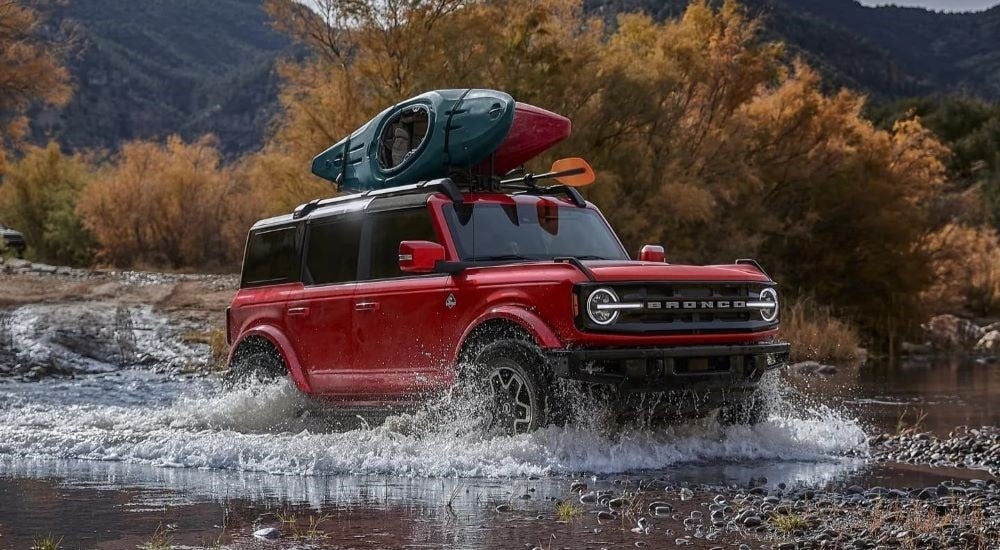
2027 Off-Road Capabilities of the Ford Bronco
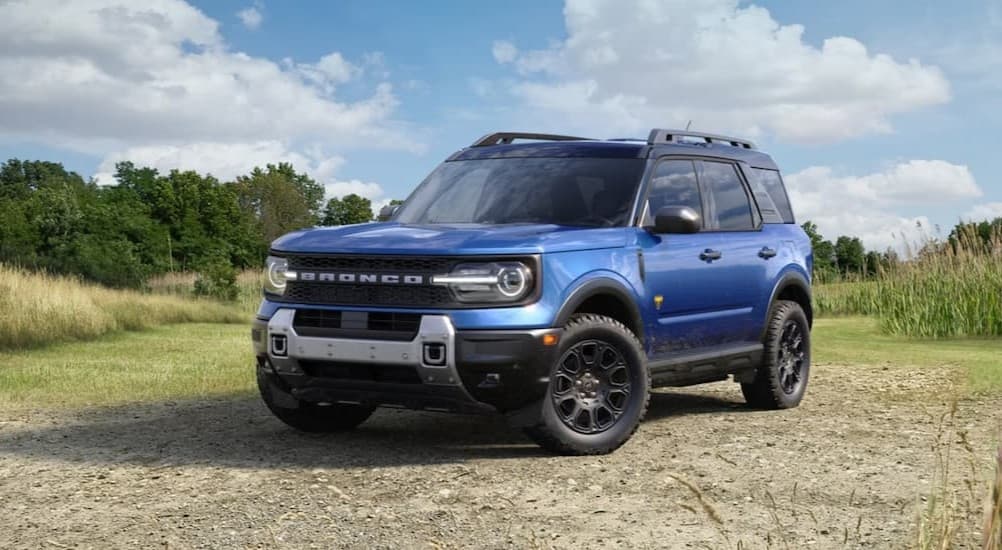
What I Tell Drivers About 2027 Ford Bronco Off-Road Capabilities A quick note before we dive in: Everything here is current as of September 2026. Ford hasn't released full 2027 Bronco specs yet, so the numbers below come from the current 2026 lineup and Ford's early 2027 previews. We'll update this post as Ford shares more. Before you order, check with our team for the latest details. How Do Ford Bronco G.O.A.T. Modes Work for Off-Road Driving? Ford Bronco G.O.A.T. Modes (Goes Over Any Type of Terrain) work by adjusting throttle response, shift timing, traction control, and four-wheel-drive engagement to match the conditions you're driving in. You just turn the dial on the center console. Depending on the trim, you'll get five or seven modes. Every Bronco gets Normal, Eco, Sport, Slippery, and Sand. Badlands, Stroppe Edition, and Raptor models add Off-Road, Rock Crawl, and Baja; on those trims, Off-Road takes the place of Sand. Each mode tunes the drivetrain for a specific surface. Slippery softens throttle response and tightens traction and stability control for snow, ice, and wet roads. Sand engages the four-wheel-drive lock for soft sand or deep snow. Off-Road is built for muddy, rutted, or uneven ground. Rock Crawl engages the four-wheel-drive lock and the rear differential lock, and at slow speeds the front trail camera automatically pops up so you can see what's ahead. Baja sharpens suspension and throttle response for high-speed runs over loose terrain. The Bronco also comes with some handy trail tech. Trail Turn Assist brakes the inside rear wheel during slow, tight turns, which shrinks your turning radius on narrow trails. Trail Control works like cruise control for low-speed off-roading, so you can focus on steering on steep climbs and descents. Want to see how these settings work in person? Give our sales team a call or stop by our Rhinebeck showroom. Table of Contents What Are the Ground Clearance and Off-Road Angles of the 2027 Ford Bronco? What Features Are Included in the 2027 Ford Bronco Sasquatch Package Across Trims? Is Independent Front Suspension Better for Off-Roading Than a Solid Front Axle? How Deep Can the Bronco Ford Water and How Do You Maintain the Drivetrain Afterwards? Where Can You Test Drive or Buy a 2027 Ford Bronco Near Rhinebeck NY? What Are the Ground Clearance and Off-Road Angles of the 2027 Ford Bronco? With 35-inch tires, the current Bronco offers up to 11.6 inches of ground clearance on 2-door models and 11.5 inches on 4-door models. Approach angle is 43.3 degrees and departure angle is 37.0 degrees on the 2-door (36.9 on the 4-door). Breakover angle is 28.9 degrees on the 2-door and 26.3 degrees on the 4-door. We expect the 2027 model to land in a similar range. Those numbers let you climb over boulders, crest steep hills, and handle sharp drops without scraping the underside or the bumpers. Ground clearance depends on your tire size and suspension setup. Without the Sasquatch Package, current models range from about 8.3 inches on the Base to 10.5 inches on the Badlands. That's plenty for forest trails and deep snow. If you want maximum clearance, the Bronco Raptor tops the lineup at 13.1 inches. Underbody protection matters when you're really putting that clearance to work. Full-vehicle steel bash plates come standard on the Badlands and are available on other trims through packages like Black Diamond. They help shield important components underneath from rocks and logs. The available heavy-duty modular steel front bumper gives you mounting points for a winch, light pods, and other trail gear, and tow hooks help you recover yourself or a buddy when things get sticky. What Features Are Included in the 2027 Ford Bronco Sasquatch Package Across Trims? The Sasquatch Package adds 35-inch LT315/70R17 rugged-terrain tires on 17-inch alloy wheels, electronic-locking front and rear axles with a 4.7 final drive ratio, high-clearance fender flares, and HOSS 2.0 suspension with Bilstein position-sensitive dampers. For 2026, it comes standard on the Heritage Edition and Stroppe Edition and is available on the Base, Big Bend, Outer Banks, and Badlands. We expect similar availability for 2027. The front and rear electronic lockers make both wheels on an axle turn at the same speed, no matter how much traction each tire has. That means you can keep crawling through mud or over slick rocks even when a couple of tires lose grip. The Bilstein dampers use position-sensitive valving to soften hard hits while keeping things controlled over washboard roads. If you want even more, the FOX internal bypass dampers of HOSS 3.0 are available as a separate upgrade on Badlands, and they come included with the Wildtrak Package. Because Sasquatch is offered on entry-level trims, you can get serious trail capability without jumping to a pricier model. Whether you add it to a Base or an Outer Banks, these factory upgrades mean you can skip the aftermarket lift and tire swap and keep your factory warranty intact. Is Independent Front Suspension Better for Off-Roading Than a Solid Front Axle? Independent front suspension gives you better high-speed control, sharper steering, and a more comfortable ride on dirt roads and highways. A solid front axle is better for extreme low-speed rock crawling articulation. For most drivers, the Bronco's independent front setup, paired with a solid rear axle and the HOSS (High-Performance Off-Road Stability Suspension) system, strikes a great balance between daily driving and real trail capability. A solid front axle sends bumps across the whole front beam. Independent front suspension lets each front wheel react on its own. The result is less steering kickback, less head-toss on uneven ground, and front tires that stay planted when you're moving quickly on dirt. Higher-performance setups build on this. HOSS 3.0 adds FOX internal bypass dampers, front steel bash plates, and a Ford Performance severe-duty steering rack. Solid axles still have their fans among dedicated rock crawlers, but a modern independent front suspension gives you predictable handling whether you're on the interstate or a rutted back road. How Deep Can the Bronco Ford Water and How Do You Maintain the Drivetrain Afterwards? With the Sasquatch Package, the current Bronco is rated for up to 33.5 inches of water fording, and the Bronco Raptor is rated for up to 37 inches. After a deep crossing, check your front and rear differential fluid right away. If it looks milky or shows signs of moisture, replace it. Inside, the Bronco is built for messy days. Available marine-grade vinyl seats resist mildew and grime, and rubberized floor mats with drain plugs let you hose out mud and water afterward. In my 10 years as a Sales Consultant, I always remind off-road drivers that differential breather tubes can end up underwater during deep crossings. When the gear housings cool down quickly, they can pull water in. Checking your axle and transfer case fluids after water runs helps prevent gear corrosion and protects expensive drivetrain parts for the long haul. Your owner's manual has the specific service guidance for your model. Where Can You Test Drive or Buy a 2027 Ford Bronco Near Rhinebeck NY? If you're interested in exploring or custom ordering a 2027 Ford Bronco near Rhinebeck, visit Ruge's Ford to go over trims, option packages, and estimated order timelines. Taking a 2026 Bronco out on local roads is a great way to get a feel for cabin comfort, driving dynamics, and visibility before you lock in an order. We'll help you through every step. Current models offer the 2.3-liter EcoBoost four-cylinder with either a 7-speed manual or a 10-speed automatic, and the 2.7-liter EcoBoost V6 paired with a 10-speed automatic. For 2027, Ford has also previewed two new models. The Bronco RTR uses the 2.3-liter EcoBoost with standard 33-inch tires and Bilstein shocks, and the Sasquatch Package and HOSS 3.0 are available. The Bronco Filson uses a version of the 3.0-liter EcoBoost V6 from the Raptor. Custom factory ordering lets you choose your exact paint, top, and gear packages. Ready to compare models or talk through custom ordering? Stop by our dealership in Rhinebeck or give us a call at (845) 876-4440. © 2026 Ruge's Ford. All rights reserved.